

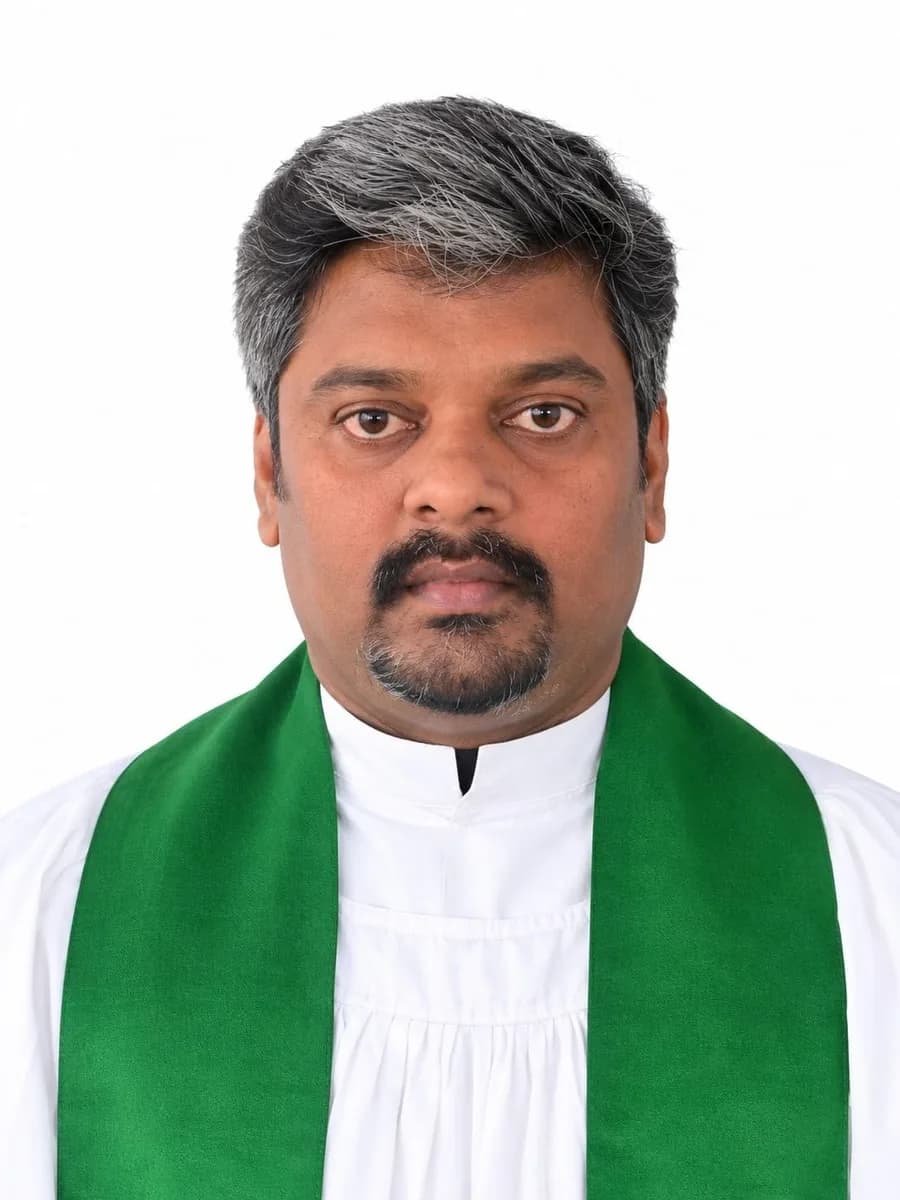
Rev. M. Roy Hessian
Bachelor of Arts in Economics · Master of Arts in Economics · Bachelor of Divinity · Master of Theology
The road walked
Each pastorate served, in order, with what the ministry there brought about.
- 2011-2017
Adhanur Pastorate - Thanjavur DCC
Deacon and Presbyter
construction and dedication of a new church.
- 2019 - 2021
Sirukunra Pastorate - Anaimalai DCC
PC Chairman in Charge - Additional
- 2019-2021
Sholayar Nagar Pastorate - Anaimalai DCC
PC Chairman in charge -Additional
- 2019- 2022
Mudis Pastorate - Anaimalai DCC
PC Chairman
Renovation of the Church./ Construction of a new parish Hall.
- 2019-2022
Anaimudi Pastorate - Anaimalai DCC
PC Chairman Incharge - Additional
Church Renovation at Anaimudi Church.
- 2022-2023
Kumbakonam Pastorate - Thanjavur DCC
PC Chairman
- 2023-2025
Thalavapalayam Pastorate - Karur DCC
PC Chairman
- 2025 onwards
St. Andrew's Pastorate -Thanjavur DCC
PC Chairman
Degrees
Secular
Bachelor of Arts in Economics
Bishop Heber College / Bharathidasan University · 2000-2003
Master of Arts in Economics
Annamalai University · 2004- 2006
Theological
Bachelor of Divinity
Tamilnadu Theological Seminary- Senate of Serampore university · 2007-2011
“An alternative approaches to leadership In the light of Jesus life towards the kingdom of God”
Master of Theology
Gurukul Lutheran Theological college - Senate of Serampore University · 2017-2019
“Theo-Ethical analysis of the Christian Education Syllabus of the Church of South india - Trichy Tanjore Diocese”
Contributions
Ecological Concern
Director · 2026 onwards
Bishop Heber Higher Secondary School, Teppakulam, and St. Peter’s Higher Secondary School, Thanjavur, received National Green School recognition. Six diocesan students received DST INSPIRE MANAK awards @ Rs. 10000 cash prize for scientific innovation, and many students earned further recognition through science fairs and innovation programmes. 3500 tree saplings planted, bird nest boxes fixed and seed balls were distributed to our clergy and laity and survival monitoring is done. Diocesan administrative and ecological maps have been prepared, vulnerable wetlands have been identified for potential restoration, rainwater harvesting, energy-saving measures, plastic reduction, reusable materials and kitchen gardens have been established.